Friday, 21 August 2009

Episode 311 - Pamelo and Prawn Salad

Scrumptious juicy sacs of sweetness

One of my babes gave me a pamelo the other day. Well, I'm not a really big fan of it but I must say her family grows really good pamelos! haha They're so sweet and juicy eaten just by itself. But you can also fancy it up with some fresh prawns and a tasty sweet and sour sauce. Here's a straight forward recipe which you can wip up as a starter for your meal! FYI: Pamelos are some sort of our local grapefruit.
First, you need to make this sauce then you can go for the salad recipe.
Sweet and Sour Fish Sauce
Ingredients:
2 red chillies, deseeded & chopped, 1/2 garlic clove, finely chopped, 60ml lemon juice/50ml vinegar, 60ml fish sauce, 3 tbspns soft brown sugar, 125ml water, boiled & cooled
Method:
Place all ingredients in a jar and shake well to mix.
*Tip*: This makes around 275ml. Refridgerate sauce in jar and use later for any other recipes. Keeps good in fridge around 2 weeks or less.
And for the recipe... A simple but yet a delish Thai delicacy...


Prawn & Pamelo Salad with Sweet and Sour Fish Sauce

Ingredients: 400g tiger prawns, skin peeled, The flesh of 1 medium size pamelo, peeled and segmented into small bite size pieces, 2 small red onions, thinly sliced/chopped ,1 small riped avocado, sliced thinly in wedges, 4 tbspns sweet and sour fish sauce, A handful of coriander leaves, chopped or lightly torn with fingers

Method:
To cook prawns, peel off skin and cook in boiling water for around 2 minutes till they turn pinkish orange in colour. Remove from water and leave to cool. Place the rest of the ingredients in a large salad bowl and lightly toss with the sauce drizzled on to it. To serve, place salad in a cocktail glass and drizzle a few teaspoons of sauce on top.

Visit link: http://www.ehow.com/video_2335026_cut-avocado.html for a video of how to cut avocado!

How to cut a pamelo~


First, cut the top and bottom bit of the pamelo. Then, with the tip of the knife, pierce through the skin (as close as you can get to the flesh but not through the flesh) from top to bottom. Repeat, making around 6-7 of these around the pamelo. Now you can easily peel of the outer skin of the pamelo with your fingers. Break open the pamelo by pressing your thumbs in the middle of the pamelo (feel the grooves of the segment of the pamelo) with the rest of your fingers on the side of the pamelo. Cut off the top of the segments and peel of the skin to get the flesh out!

Enjoy the recipe!

Recipe inspired and referred from Fresh Chinese by Wynnie Chan

Thursday, 20 August 2009

Episode 310 - How To Joint A Whole Chicken

Cutting up a whole chicken can be very tedious and tricky. Theres the drums, the wings, the breasts... And if you don't use the right gadget and right ways to cut it, the cut chicken can turn up really messy! So this is a very detailed guide on how to joint a whole chicken - properly :o) Firstly, there are 2 very basic things you need to have and know : 1 - To have a very sharp and good kitchen knife and 2 - locate the joints by feel before cutting to separate them. Then the following:

1. Chicken legs - Put the chicken breast side up on a chopping board. Pull one leg away from the body. Cut through the skin between the body and leg, cutting down through the meat, and then work it way down to the thigh joint. Bend the leg so that it eases the leg bone from its socket, then cut through the ball-and-socket joint. Repeat with the other leg.


2. Chicken wings - Press one wing against the body of the bird so that both parts of the shoulder are visible. Cut through the skin, then down thorugh the joint to sever. Tuck the wingtip under the shoulder to make a triangular shape joint. Repeat with the other wing.


3. Split the carcass by cutting down around and under both breasts with poultry shears or strong kitchen scissors. Cut through the rib cage, separating the backbone from the breasts. Repeat the other side.

4. Cut along the centre of the breast with poultry sheers or kitchen scissors or a sharp knife, slide a knife under the breats meat on each side of the bone to release 2 boneless breast joints or cut straight down between the breast bone with a large cook's knife to give two joints on the bone.


5. To separate the leg joint into a drumstick and thigh, put the joint skin side uppermost, then flex the drumstick slightly so that you can see where the central joint is. Cut through the ball and socket joint.

Now you have everything in a set of 2 except for a carcass (not in pic) to make your stock with! This can also be used to joint other poultry such as duck or turkey but for small birds, you can leave the thigh joint with the drumstick.

or you can go to this link for a video: http://www.wonderhowto.com/how-to/video/how-to-joint-a-chicken-with-a-boning-knife-242088/

Wednesday, 19 August 2009

Episode 309 - Food Art: Coffee Art

Coffee lover? I'm more of a tea person but I do like the boost you can get with a nice aromatic cup of coffee. Coffee Art is pretty famous nowadays. I think that there's a restaurant at Kiulap, BSB (Au Lait, Seri Qlap Mall) which serves its coffee with designs on the froth. There are so many designs you can place on your lattes. And here's some to prove to you!

Top to Bottom: Unicorn, Bruce Lee, Barrack Obama, Monkey face and Moon & Star.

Episode 308 - Food Art : Japanese Bento Sets

Japanese Bento Lunch Box

I find these really amazing! How much fun and creativity you can get with food. There are so many things you can do with rice, vege and fruits! But there's definitely alot of patience and passion put into these fantastic yet yummy creations!

More cute Bento lunch sets


Kind of a little too hard to eat it right? They're just too pretty...

Episode 307 - Know your Lamb: Part 2

I had a few complains regarding my recent post on the lamb. And yes I missed out on stating which part of the lamb is the best to cook. I must say, it actually depends on the individual. Some people prefer their meat to be a bit hard and chewy and some like them soft and tender. It also depends on how the meat is cooked. So, when cooking lamb, one must be very sure of how to cook it including the duration and the done-ness preferences you want i.e. rare (dark pink in the centre), medium-rare (light pink in the centre) or well-done (light brown colour througout).
Ok, cutting the suspense. The tender parts of the lamb would definitely be the parts where the muscles of the animal are used less frequently and that would be the ribs and the loin areas! Meat from the ribs and loin are best to cook using these methods: grill, pan broil/pan fry, broil and stir fry. These areas are usually cooked without much liquid as they are quite succulent in texture.
However, the less-tender cuts of the lamb would be those areas where the muscles are used very often, which include: the shoulder/ chuck, rump, round and legs. These meat may be less tender BUT they are very flavourful! The best ways to cook the less tender meat are by: braising, stewing and roasting! Because these meat are pretty tough, they are usually cooked with liquid.

Here's a simple picture of the main parts of the lamb


BAAa-AAaa


The best ingredients to marinade lamb meat for roasting or pan-grilled would be thyme, rosemary (best if the herbs are fresh but dried ones work well too), HP sauce, Worchestershire sauce (I always have to go look at the bottle to check how it's spelled! and pepper and salt to taste. If you want a sweeter taste, put a few teaspoons of brown sugar into your marinade and this will actually caramelise the outer part of your roast or steak! For more flavour and taste, the meat should be left marinated overnight in the fridge but a few hours of marination would be fine and you can always season them again while they are cooking.

Usually a 1-inch thickness steak would require 7-9 minutes on the first side and another 7 on the other side. And the best sauce to serve a lamb steak is non other than mint sauce or a sweet and sour raspberry sauce.
Try the marinade as mentioned above and I'll post something more interesting next, so stay put!

Monday, 17 August 2009

Episode 306 - Know your Lamb!

A friend was asking what is lamb shank? I told him to Google it then he said that I was "handal" in all this cooking stuff and demanded a definition. Well, I Googled it (HAHA) and below is what I got. You should know your lamb because different parts will give you different types of meat to cook with. Personally, lamb is a very nice type of meat to cook, either with curry or roasted, it can be a very sweet and succulent meat if you know how to cook it right!

LAMB info 101:

Lamb, hogget, and mutton are the meat of domestic sheep. The meat of an animal in its first year is lamb; that of an older sheep is hogget and later mutton.

There are five basic major cuts of lamb: leg, loin, shoulder, rack and shank/breast.

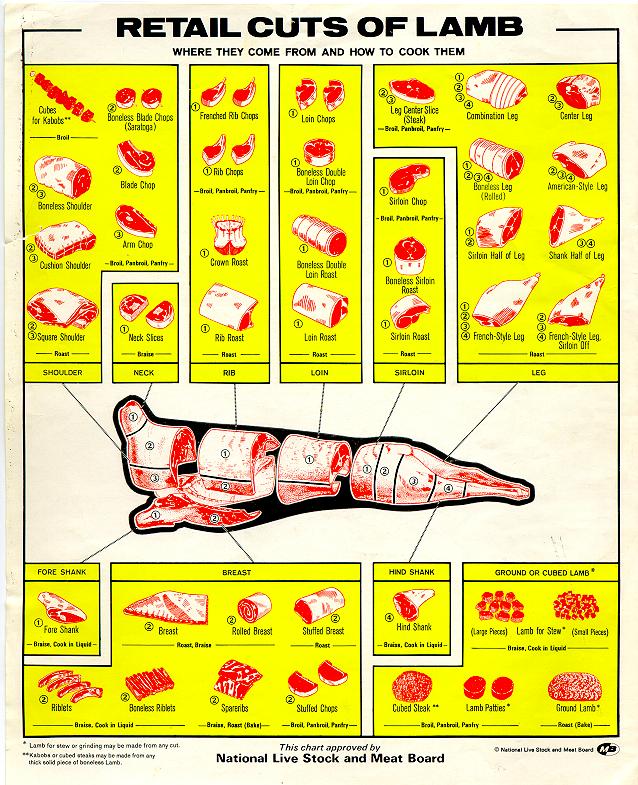
Lamb chops are cut from the shoulder, rib, loin and sirloin area. Loin chops and rib chops are the most tender. The less expensive shoulder chops (called blade and arm chops) and sirloin chops from the leg can be just as tender, but they are not as visually attractive because the meat is separated by bands of connective tissue.

The leg of lamb can be the whole leg including the sirloin, or the short cut leg, sirloin of. It is usually roasted, though it can be broiled, grilled and barbecued as well. Some find the rear of the lamb has bolder flavor, but retains the same juicy tenderness as the rib and loin portions.

The loin comprises the ribs between the forequarter and hindquarter (sirloin and leg).

Rack of Lamb

The rack is the unsplit rib of the carcass, which includes ribs 6 through 12 and the thick, meaty rib-eye muscle (the meat).

Lamb Shoulder

The shoulder of the lamb is less expensive than the rib, loin or leg. While the meat is well-marbled and full-flavored, there is more connective tissue. The shoulder yields the following cuts: cubes for kabobs; blade chips, boneless blade chops and arm chops and the boneless shoulder, cushion shoulder and square shoulder.

The sirloin is the section between the back of the loin and the hipbone. The boinless sirlon is the equivalent of the beef tenderloin, tender and flavorful.

Parts of the LAMB:

COOKING TIME ~ LAMB ROAST
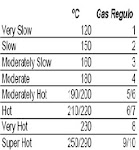
Depending on the size of the roast, whether it is leg, rib or shoulder, and whether you want the meat rare, medium or well done, estimate 15 to 40 minutes per pound at 324°F. A meat thermometer will register 145°F for rare, 160°F for medium and 170°F for well-done. Cover to keep warm and allow the roast to stand for 15 minutes before serving so the juices will settle. Remember that during this time the temperature will continue to rise 5 to 10 degrees, so remove the lamb before the temperature reaches the desired degree of doneness.


Do check out my next post, it's a recipe and some tips for cooking lamb!

Thursday, 6 August 2009

Episode 305 : Food Jokes

Clean food jokes to lighten and brighten up your day!
I believe that there are 2 things which can really put off the stress out in a day's of work & tire, food and jokes! You know what they say, Laughter is the best medicine!
Pillsbury Dough Boy Dead At 71
Veteran Pillsbury spokesman, Pop N. Fresh, died yesterday of a severe yeast infection. He was 71. Fresh was buried in one of the largest funeral ceremonies in recent years. Dozens of celebrities turned out, including Mrs. Butterworth, The California Raisins, Hungry Jack, Betty Crocker, and The Hostess Twinkies.
The graveside was piled high with flours as longtime friend Aunt Jemima delivered the eulogy, describing Fresh as a man who "never knew how much he was kneaded." Fresh rose quickly in show business, but his later life was filled with many turnovers.
He was not considered a very smart cookie, wasting much of his dough on half-baked schemes. Still, even as a crusty old man, he was a roll model for millions.
Fresh is survived by his second wife. They have two children and one in the oven. The funeral was held at 4:50 for about 20 minutes.
Elephant Stew
Serves: about 380 people.
Ingredients: 1 large Elephant, Salt and pepper to taste, 2 medium Rabbits (optional). Preparation: Cut up Elephant into bite size pieces.(Takes about 2 Months). Add brown gravy to cover. Cook about four weeks at 465 degrees over a hot fire. Special Note: For larger groups, add 2 Rabbits, but only if necessary as most people don't like to find hare in their stew.
Flakey Murder
Two police officers respond to a crime scene behind a grocery store. The homicide detective is already there.
"What happened?" asks the first officer.
"Male, about twenty-five, covered in Raisin Bran and dead as a doornail."
"Good grief," says the second officer. "Didn't we have one covered in Frosted Flakes yesterday? And Captain Crunch last week?"
"You're right. I'm afraid," said the detective as he took a drag from his cigar, "this is the work of a cereal killer."
Subject: Security Notification to all recipehut.com Employee
We've just been notified by Security that there have been 6 suspected terrorists working out of our kitchen. Five of the six have been apprehended. Bin Sleepin', Bin Loafin', Bin Goofin', Bin Lunchin' and Bin Drinkin' have been taken into custody.
Security advised us that they could find no one fitting the description of the sixth cell member, Bin Workin', in our Kitchen. Security is confident that anyone who looks like he's Bin Workin' will be very easy to spot.
You are obviously not a suspect at this time.
How to Bake a Cake with a Baby in the House
·Preheat oven, get out utensils and ingredients. ·Remove blocks and toy autos from table.
·Grease pan, crack nuts. ·Measure two cups flour; ·Remove baby's hands from flour, wash flour off baby. ·Re-measure flour. ·Put flour, baking powder, salt in sifter. ·Get dustpan and brush up pieces of bowl baby knocked on floor. ·Get another bowl. ·Answer doorbell. ·Return to kitchen.·Remove baby's hands from bowl. ·Wash baby. ·Answer phone. ·Return. ·Remove 1/4 inch salt from greased pan. ·Look for baby. ·Grease another pan. ·Answer telephone. ·Return to kitchen and find baby. ·Remove baby's hands from bowl. ·Take up greased pan, find layer of nutshells in it. ·Head for baby, who flees, knocking bowl off table. ·Wash kitchen floor, table, wall, dishes. ·Call baker. ·Lie down.
Lame but some still tickled you, didn't they?
Have a smiley day! (>o,<)

Episode 304 - Barbeque & Grill: Part 1

Charcoal Up & Let's Grill!!

One of my sidekicks is having a BBQ this weekend. Not so much of a good idea in this hazy weather we're having so I'm coming with a mask! haha (HAPPY B'DAY DUDEEEE!!) LOL To help, below are a few BBQ recipes!

Korean BBQ Chicken

Ingredients:
1 cup white sugar
1 cup soy sauce
1 cup water
1 teaspoon onion powder
1 teaspoon ground ginger
1 tablespoon lemon juice (optional)
4 teaspoons hot chile paste (optional)
20 Chicken Wings/ 1kg of Chicken Boneless meat (Sliced 3" x 6")

Method:
In a medium saucepan over high heat, whisk together the sugar, soy sauce, water, onion powder, and ground ginger. Bring to a boil. Reduce heat to low, and simmer 5 minutes.
Remove the mixture from heat, cool, and whisk in lemon juice and hot chile paste. Place chicken in the mixture. Cover, and marinate in the refrigerator at least 4 hours before preparing chicken as desired.

Marinated Grilled Shrimp

Ingredients:
3 cloves garlic, minced
1/3 cup olive oil
1/4 cup tomato sauce
2 tablespoons red wine vinegar
2 tablespoons chopped fresh basil
1/2 teaspoon salt
1/4 teaspoon cayenne pepper
2 pounds fresh shrimp, peeled and deveined
skewers

Method:
In a large bowl, stir together the garlic, olive oil, tomato sauce, and red wine vinegar. Season with basil, salt, and cayenne pepper. Add shrimp to the bowl, and stir until evenly coated. Cover, and refrigerate for 30 minutes to 1 hour, stirring once or twice.
Preheat grill for medium heat. Thread shrimp onto skewers, piercing once near the tail and once near the head. Discard marinade.
Lightly oil grill grate. Cook shrimp on preheated grill for 2 to 3 minutes per side, or until opaque.

*Tip*: Replace red wine vinegar with 1 tablespoon of vinegar and 1 tablespoon of grape juice.

Grilled Salmon

Ingredients:
1 1/2 pounds salmon fillets
lemon pepper to taste
garlic powder to taste
salt to taste
1/3 cup soy sauce
1/3 cup brown sugar
1/3 cup water
1/4 cup vegetable oil

Method:
Season salmon fillets with lemon pepper, garlic powder, and salt.
In a small bowl, stir together soy sauce, brown sugar, water, and vegetable oil until sugar is dissolved. Place fish in a large resealable plastic bag with the soy sauce mixture, seal, and turn to coat. Refrigerate for at least 2 hours.
Preheat grill for medium heat.
Lightly oil grill grate. Place salmon on the preheated grill, and discard marinade. Cook salmon for 6 to 8 minutes per side, or until the fish flakes easily with a fork.

*Tip*: If you can't find lemon pepper, substitute with fresh ground pepper, a tint of lemon juice and it's zest.

Images & recipes from allrecipes.com
Image of Coal in fire from flickr.com
Gotta try em!! Yummy... Enjoy!!!! XO)

Tuesday, 4 August 2009

Episode 303 - Antioxidants and Caramelised Banana Desert

This is a recipe which not only will treat your sweet tooth after dinner but will also boost the antioxidants in your body. This can be prepared in 15 minutes or less and it is completely delicious, packed with fibre and sweetness!
But... Why are antioxidants important?
- Antioxidants helps to maintain the health and prevent diseases such cancer and coronary heart disease.
- Antioxidant -contained food are usually used in dietary supplements and also preservatives in food.
-Food such as fruits (E.g. Carrots, tomato, peaches, and apricot, orange, lime and strawberries), and vegetables (E.g. brocolli) are good sources of antioxidants.
- Other food like nuts, whole grains, meat, fish,eggs, tea, coffee, soy, olive oil, cinnamon, oregano and red wine (2 glasses taken daily) contain some antioxidant compounds vital for your health!
-The best antioxidant food that you will enjoy is DARK CHOCOLATE!
- Antioxidants are also found to be anti-aging, making skin appear younger with less wrinkles! They also aid in preventing the growth of pimples and will keep skin supple and glowing!


Caramelised Banana

Ingredients:
2 medium-small firm bananas, peeled
1/2 tablespoon butter
3 tablespoons light brown sugar
1/4 cup orange juice
1/8 teaspoon ground cinnamon
1 cup low-fat vanilla ice cream or frozen yogurt

Method:
Cut bananas in half lengthwise. Melt butter in a nonstick skillet over medium-high heat. Add brown sugar and lay the banana slices on top, cut side up. Cook undisturbed for 20 seconds, then add orange juice and cinnamon. Cook for 10 seconds, then turn bananas carefully and cook for 45 to 60 seconds more, basting with the pan sauce. Divide the bananas between 2 dessert plates, drizzling the sauce on top. Serve immediately, with a scoop of ice cream (or frozen yogurt).

NUTRITION INFORMATION:
Per serving: 372 calories; 7 g fat (4 g sat, 1 g mono); 28 mg cholesterol; 61 g carbohydrate; 5 g protein; 3 g fiber; 58 mg sodium; 521 mg potassium. Nutrition Bonus: Vitamin C (15% daily value). 4 Carbohydrate Servings
Recipe and pic from: Eatingwell.com
*Tips*: Sprinkle some toasted almond nuts all over and enjoy the dessert. Or you can drizzle some melted dark chocolate on top of the ice cream.
So start taking your fruits and vegetables and you will look like an ageless Angel :0)

Monday, 3 August 2009

Episode 302 - Kitchen Info: How to buy fresh fish and seafood?

Fresh Fish?
I came across an article on tips of buying fish and seafood. How can you know that what you bought at the market is fresh? Fresh seafood will only mean one thing, that your cooked meal will taste ten times more delicous! Unless you caught the fish yourself, you cannot really trust that fish monger at the market Hehe Follow these tips to choose your fresh seafood:
Whole Fish
Look for bright, clear eyes.
The eyes are the window to a truly fresh fish, for they fade quickly into gray dullness. Dull-eyed fish may be safe to eat, but they are past their prime.
Next look at the fish. Does it shine? Does it look metallic and clean? Or has it dulled or has discolored patches on it? If so, it is marginal.
Smell it. A fresh fish should smell like clean water, or a touch briny or even like cucumbers. Under no circumstances should you buy a nasty smelling fish. Cooking won't improve it.
Look at the gills. They should be a rich red. If the fish is old, they will turn the color of faded brick.
Fish Fillets
Look for vibrant flesh.
All fish fade as they age. If the fillet still has skin, that skin should look as pristine as the skin on an equally good whole fish – shiny and metallic.
Smell it. The smell test is especially important with fillets. They should have no pungent aromas.
Is there liquid on the meat? If so, that liquid should be clear, not milky. Milky liquid on a fillet is the first stage of rot.
If the fishmonger lets you, press the meat with your finger. It should be resilient enough so your indentation disappears. If your fingerprint remains, move on.
Live Things
The best way to choose a live fish or crab or lobster is to look for, well, life. Is it scampering around in its tank? Swimming happily? Or is it sulking in a corner or hanging motionless and panting? If so, don’t buy it. Lobsters and crabs starve themselves in tanks and often can be almost empty inside when you crack open one that’s been imprisoned in a tank for weeks.
Your best bet is to make friends with the fishmonger and find out when the new shipments arrive. Plan on being there to meet it and buy then. You will be rewarded for your extra effort.
Shellfish
Buy only at the finest fish markets
. These are the places where turnover is so rapid you can be assured of fresh mussels, clams or oysters. You may still get a dead one, but the ratio will be far lower.
What is a dead one? Shellfish are sold alive, so they should react to you. Put them on the countertop and back away for a moment. Then tap the shell: It should close tighter than it was. Oysters are a little tough to do this with, but clams and mussels will definitely react. You can also tell a dead shellfish after you’ve cooked them all. Dead ones do not open after being cooked. Throw them away.
Scallops
Scallops are almost always sold shucked, so what you are looking for are “dry packed” scallops, meaning they are not shipped and stored in brine. Those scallops you see wallowing in milky ick? Leave them be. Better to buy frozen, vacuum-sealed scallops, which are perfectly good by the way, than an inferior wet-packed scallop.
Squid or Octopus
These are almost always sold to the wholesaler pre-frozen, so you should buy them frozen. Both squid, commonly known as calamari, and its more richly flavored cousin the octopus freeze exceptionally well.
Again, if you can buy squid and octopus – not to mention cuttlefish – fresh, do it! They are rare treats even at fine fish markets and should be appreciated as such. Like finfish, you should look first at their eyes, which should be clean and bright.
The Fish Market
Finally, a comment on the shop itself. The absolute bottom line is that a fish shop should not stink. I'll say it again: If you walk into a fish market and it reeks, turn around and leave. Fantastic fish can be had at a farmer’s market stall, a hole in the wall or in a flashy boutique, but none should smell like low tide. Ever.
Tips from About.com, "Before You Buy fish or Shell fish", by Hank Shaw.
Really good tips aren't they? So next time when you go to the market or buy your seafood, follow the above guide and you will have a simply delicious and nutritious cooked seafood!

Episode 301 - Kitchen Info : Microwave ovens & Food Safety

Microwaved food - Safe to eat?
Hey guys, it's been a while since I updated my blog. Was gathering some info on some fresh ideas and interesting things to post. For the start of the new season, I'm posting something on Microwave ovens and how safe is it to use them. I think that Microwave ovens are one of the greatest inventions for aiding our cooking lifestyle. Other than its convenience of heating up our food or thawing the frozen chicken, we always wonder about the following:

Do microwaves cook food from the inside out?
No. Microwaves penetrate the food to a depth of 1 to 1½ inches. In thicker pieces of food, the microwaves don't reach the center. That area would cook by conduction of heat from the outer areas of the food into the middle. In a microwave oven, the air in the oven is at room temperature so the temperature of the food surface is cooler than food in a conventional oven where the food is heated by hot air. Therefore, food cooked in a microwave oven doesn't normally become brown and crispy.

What are the recommended temperatures for microwaving food safely?
Place the thermometer in the thickest area of the meat or poultry — not near fat or bone — and check the temperature in the innermost part of the thigh and wing and in the thickest part of the breast of whole poultry. Cooking times may vary because ovens vary in power and efficiency.
Cook ground meats to 160 °F; ground poultry to 165 °F.
Beef, veal, and lamb steaks, roasts, and chops may be cooked to 145 °F; all cuts of fresh pork, 160 °F.
Poultry should reach a safe minimum internal temperature of 165 °F.
Eggs and casseroles containing eggs, 160 °F.
Fish should reach 145 °F.
Always allow standing time, which completes the cooking, before checking the internal temperature with a food thermometer.

How do you safely reheat cooked food in a microwave oven?
Cover foods with a lid or a microwave-safe plastic wrap to hold in moisture and provide safe, even heating. Turn back a corner for the steam to vent.
Heat ready-to-eat foods such as hot dogs, luncheon meats, fully cooked ham, and leftovers until steaming hot.
After reheating foods in the microwave oven, allow standing time. Then, use a clean food thermometer to check that food has reached 165 °F.

What containers and wraps are safe to use in the microwave oven?
Only use cookware that is specially manufactured for use in the microwave oven. Glass, ceramic containers, and all plastics that are safe to use usually will be labeled for microwave oven use.

SAFE TO USE:
Any utensil labeled for microwave use.
Heatproof glass (such as Pyrex, Anchor Hocking, etc.).
Glass-ceramic (such as Corning Ware).
Oven cooking bags.
Baskets (straw and wood) for quick warm-ups of rolls or bread. Line the basket with napkins to absorb moisture from food.
Most paper plates, towels, napkins and bags. For optimal safety use white, unprinted materials.
Wax paper, parchment paper, heavy plastic wrap. Do not allow plastic wrap to touch food; vent it to allow a steam escape.
Heat-susceptor packaging.

NOT SAFE TO USE:
Cold storage containers: margarine tubs, cottage cheese and yogurt cartons, etc. These materials are not approved for cooking and chemicals can migrate into food.
Brown paper bags and newspapers.
Metal pans.
Foam-insulated cups, bowls, plates or trays.
China with metallic paint or trim.
Chinese "take-out" containers with metal handles.
Metal "twist ties" on package wrapping.
Food completely wrapped in aluminum foil.
Food cooked in any container or packaging that has warped or melted during heating.

Do microwaves make food "radioactive"?
No. Microwave energy uses a wave length similar to television, radio waves, electric shavers and radar. It does not make food "radioactive." X-rays and nuclear radiation are at the other end of the spectrum and are a million times more powerful.


The site provides info on how to thaw frozen food safely, whether it is safe to use aluminium foil & wraps to heat your food and all the other basic info you need to know about your microwave ovens!

Alright, enjoy the read and make sure you use a microwave safe products (e.g. Pyrex) when using the Microwave oven.

Wednesday, 22 July 2009

Episode 219 - Butter Jammed Cookies

Rich Butter Jammed Filled Cookies
Another recipe from Betty Saw's Cookies by Marshall Cavendish Cuisine mini cookbooks collection! I tried this one out and was so satisfied with the results. My sis's frens just couldn't stop munching on them when they came to the house for tea! The cookies are really buttery and taste extra good with the jam in the center!
Butter-Jammed Cookies
Ingredients:
270 g All-purpose/ Plain flour
1 tsp baking powder
240g Butter
90g Icing Sugar
2 tsp Vanilla Essence
30 g sesame seeds (roasted)
Strawberry Jam or any other flavour Jam
Method:
Line baking trays with non stick baking paper. Sift together flour and baking powder. Mix butter, icing sugar, vanilla essence and sifted dry ingredients in an electric mixer. Beat on lowest speed for 10 seconds. Increase speed to medium and beat for 15 minutes until mixture is smooth and light.
Spoon mixture into a cookie press or an icing pipe fitted with a large star nozzle. Pipe 2.5-cm (1 inch) diameter circles onto prepared trays, starting from the centre and leaving a 0.5cm (1/4 inch) hollow in the centre. Fill each hollow with 1/4 tsp jam.
Bake in preheated oven 175 Degrees Celsius (345 Degrees Farenhiet) oven for 12-15 minutes or until light golden. Leave, cookies on trays for 2 minutes before transferring them to wire racks and cool.
*Tip*: This recipe can do without the Sesame seeds. I prefer the cookies to be a lil bit crunchier and more golden brown so I used around 180 - 190 Degrees celsius for around 20 minutes. Trial and error would be the best to bake cookies. Baking trays can be lightly greased with butter instead of baking papers.

Friday, 17 July 2009

Episode 218 - Cream of Mushroom Soup

This is one of my mum's favourites. Inspired by Jamie Oliver's Real Mushroom soup from Jamie's Dinner book, I whipped this up on my own and it taste rather yummy!


Cream of Mushroom Soup

Ingredients:
200g fresh Button Mushrooms, sliced
200g fresh Portobello Mushrooms, sliced
200g fresh Shitake Mushrooms, sliced
1 cup of Cream
2 tablespoons of Cream Cheese
1 litre of Chicken Stock
2 cloves of Garlic, peeled and chopped
1 Red onion, peeled & chopped
Olive oil
2 tablespoons of butter
A handful of fresh thyme or 1 tablespoon of dried thyme
Pepper and salt

Method:
In a pan, place a few tablespoons of Olive oil and butter then saute your mushrooms for abit and put in the garlic, onion and thyme (also, some pepper and salt to taste). Stir until mushroom is soft and broth starts to ooze out. Put a few large spoons of chicken stock and stir and let it boil for awhile. After that, put the whole lot into the blender and blend it till creamy.

Pour it back into the pan and pour in the cream and cheese, while stirring under medium low heat. At this moment, you also add the remaining chicken stock and let it boil. Add some more salt and pepper to taste.

Serve with toast and add a squeeze of lemon and a drizzle of Olive oil with some parsley on top!

Serves: 5

*Tip* - To make Chicken stock:
Boil more than a litre of water with 600g of chicken bones or leftover Chicken roast with Carrots, Large Onion, pepper and salt. You can always make more Chicken stock and freeze it up and use it later for your dishes and soups!

Episode 217 - Home & Decor - July 2009

Hi guys! Sorry for the lack of update. But here's what I promised in the last post, a summary of my several favourite reads on the July 2009 issue of Home & Decor Magazine (Singapore). This magazine has pretty much everything about interior decor for the home. From furniture to artworks for your living room, kitchen and many more, you can find it in this magazine. It features anything modern and even anything classic for your home.

Here are the highlights for this month's issue of Home and Decor:

Pg 62 & 68 - "Open to the Sun" features a couple's home rebuilt, inspired by their trips to the Mediterranean. Their home is rebuilt with open decks with light coloured themes and alot of glass windows for lots of light and warmth. Check out Pg 64 with the idea of their kitchen utensils being displayed outside under a piece of classic yet modern art piece.

Bread Toaster and Bun Warmer by BrAun

Page 80 - features 5 cool toasters and bun warmers for your breakfast. From Electrolux to BrAun, these steel coated toasters look rather stylish and yet works like a charm for your bread and buns!

Page 84 - "tray with a twist", a great innovative yet simple design of trays which are both practical and have non-slip surfaces.

The 3-tier Serving stand from IKEA

Page 86 - "get a grip" of these serving dishes. You can choose from one-handled to two handled serving dishes. Check out the 3-tier serving dish from IKEA. Great for serving finger food at parties and your Festive biscuits and cakes for Hari Raya or Chinese New Year!

Dish Drainer, ASKER from IKEA
Page 108 - 110 - Organise and characterise your kitchen with these industrialised- looking shelves. Great for those who like easy-to-reach and open style shelves. Also, don't waste the space of your kitchen walls. Fill it up with stacking and hanging racks to put up your kitchen utensils and your lil bottles of herbs & spices.

Page 140 - I lurve the Kitchen's concept of using glossy balck cabinets and a contrast colour for the kitchen countertop. Sophisticated and elegant!

And the best pages are 170 - 175 - "Good Morning" , a guide to dressing up your breakfast with simple deco and ideas. Ideas for your breakfast on the : 1. setting, 2. the tableware and 3. the food!

Page 180 - Tips for eliminating odour of deep-frying in your kitchen to removing foul-smelling spills in the fridge!

Alright, so these are some things that you can look out for in the July's issue of Home & Decor. Make sure to get one and read up and enjoy the illustrations!
Till my next post, Cheerios! xo

Tuesday, 7 July 2009

Episode 216 - Kitchen Essentials : Cool Gadgets For Your Food

I came across some really cool stuff which compliments eating our food in a very cool and funny way! I was doing some research online and I came across a website called Paran.com which features innovative gadgets and appliances. These are what I found!

From Top to Bottom:

Motorised Ice-Cream Cone which can turn without you needing to turn the cone. You can just leave your tongue on it and let it turn by itself! *haha*

The very Innovative Twirling Spaghetti Fork, again, sweat no more while eating your spaghetti or Noodles, you can just let the fork twirl the noodles up for you!

This one is for those Cameramen/Women (which are very popular nowadays) - Camera Lens Coffee Cup. Drink your coffee stylishly with this camera lens looking cup.

And then there is the coolest toaster ever made. The Scanner Toaster by Electrolux. you can practically scan anything onto your toast, even pics and notes!

Last but not least, my favourite invention, the Butter - Stick Type! Isn't that just smart? You know your sticky glue in a stick, well, they used that idea and placed butter on a stick so you can just butter your bread mess-free! LOL

I hope you enjoyed these crazy but workable innovations. On my next post, I'm featuring some great stuff from the July Issue of Home&Decor.